JOURNAL / NUTRITION & LONGEVITY / TMB-2026-08-17-VALINE
Should You Cut Valine to Live Longer? What the New 23% Lifespan Study Really Means
Protein is normally presented as an uncomplicated good.
It supports muscle, recovery, bone, enzymes, immune function and nearly every tissue in the body. Older adults are often encouraged to consume more of it to reduce frailty. Athletes carefully calculate it. Supplement companies isolate individual amino acids and promote them as performance enhancers.
Longevity research is revealing a more complicated story.
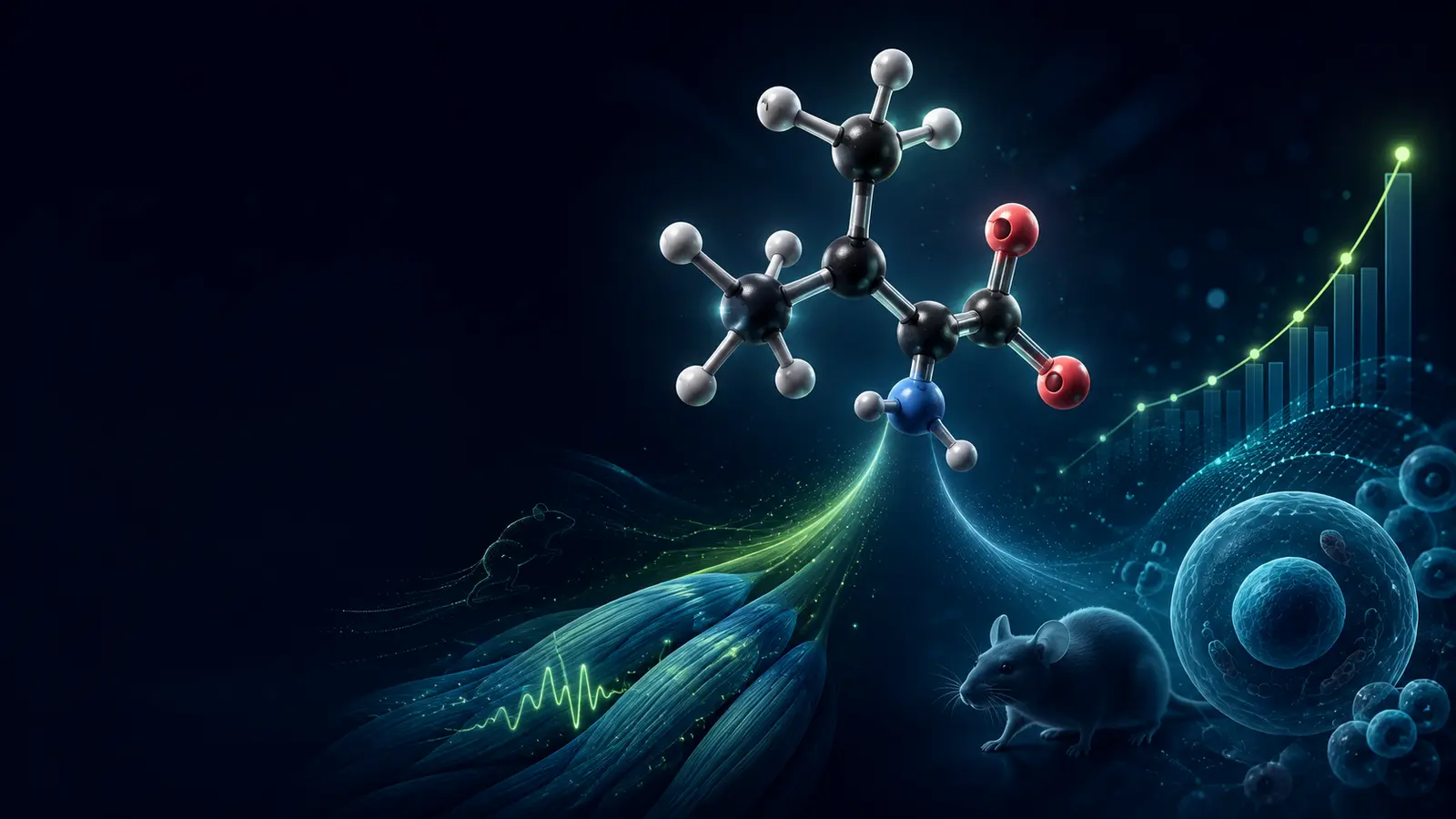
A study published in Nature Aging on July 24, 2026 found that reducing one essential amino acid—valine—throughout life improved metabolic health and increased median lifespan in male mice by approximately 23%. Female mice became leaner and showed several health improvements, but did not live significantly longer.
The headline sounds ready-made for a new diet trend:
Eat less valine and live 23% longer.
That is not what the research proves.
The experiment used an artificial, precisely controlled diet in one mouse strain, began shortly after weaning and has no human lifespan equivalent. It also produced potential bone tradeoffs and different effects in males and females.
The study is still important. It suggests that individual amino acids may influence aging differently and that the longevity effects attributed to “low protein” may depend partly on protein composition rather than protein alone.
But the most promising application may eventually be a drug or targeted intervention that reproduces the beneficial signal—not a nutritionally inadequate diet.
What is valine?
Valine is one of nine essential amino acids. “Essential” means the body cannot manufacture enough of it and must obtain it through food.
Valine is also one of three branched-chain amino acids, or BCAAs:
- Valine
- Leucine
- Isoleucine
BCAAs participate in protein synthesis, tissue repair, energy metabolism and signaling between nutrient availability and cellular growth. They are found throughout the food supply, particularly in meat, dairy, eggs, fish, soy and other protein-rich foods.
Valine is therefore not a toxin or unnecessary dietary contaminant. Complete deprivation would eventually cause deficiency.
The scientific question is narrower: could consuming substantially less than the amount found in a typical high-protein diet—while still avoiding deficiency—produce beneficial metabolic signals?
What the researchers actually did
Researchers assigned male and female C57BL/6J mice to one of two amino-acid-defined diets beginning at four weeks of age.
The control diet derived approximately 21% of its calories from amino acids. The experimental diet contained 67% less valine.
Crucially, the researchers did not simply remove protein and allow the experimental mice to become malnourished. The diets contained identical amounts of fat and carbohydrate and were designed to provide the same number of amino-acid-derived calories. Nonessential amino acids replaced the missing valine.
This degree of precision is difficult to reproduce with normal food.
The mice remained on their assigned diets for life while researchers assessed body composition, glucose regulation, frailty, physical performance, cognition, inflammation, cancer observed at necropsy, cellular senescence and survival. Nature Aging study
The results were impressive—but not universal
Male median lifespan increased by 23.42%
Male mice receiving the valine-restricted diet had a 23.42% longer median lifespan. A prespecified measure of maximum lifespan also increased.
The ten longest-lived males in the valine-restricted group lived an average of 14.5% longer than the ten longest-lived control males.
Female lifespan did not increase significantly
Female mice showed several favorable health effects, but neither median nor maximum lifespan increased significantly.
That sex difference is not a footnote. A longevity intervention that works strongly in one sex and not the other may involve sex hormones, metabolic differences, disease patterns, mitochondrial responses or an inappropriate degree of restriction for one group.
It also weakens any claim that valine restriction represents a universal aging mechanism.
Metabolic health improved in both sexes
Valine-restricted mice gained weight more slowly, accumulated less fat and demonstrated better glucose control.
They actually consumed more calories relative to body weight, while metabolic-chamber testing showed higher energy expenditure. Their leanness was therefore not simply the result of eating fewer calories.
The diet appeared to increase thermogenic activity—the dissipation of energy as heat—in brown fat and possibly other tissues.
Frailty and markers of cellular aging improved
Frailty-related measures improved in both sexes. Researchers also reported reductions in several markers associated with cellular senescence and inflammatory signaling.
Cancer observed during gross necropsy was less common when males and females were pooled. However, the suspected cancers were not formally classified by a pathologist, so this finding should be treated as exploratory rather than proof of cancer prevention.
Cognitive effects were mainly seen in females
Female mice showed improvement in some short-term memory measurements and reductions in neuroinflammatory glial activity.
The diet did not, however, produce a general improvement across every cognitive or performance test.
The study also revealed possible tradeoffs
The valine-restricted mice gained less absolute lean mass along with less fat. Quadriceps mass relative to body weight was preserved, but physical function did not consistently improve.
Male mice performed better on one hanging test, although statistical analysis indicated that much of the advantage came from their lower body weight. Female mice performed slightly worse on certain weight-adjusted coordination and grip-related measures.
Researchers also identified changes in bone structure:
- Male mice had a smaller femoral cross-sectional area and reduced resistance to bending forces.
- Female mice had reduced trabecular thickness in part of the femur.
The animals’ bones reached normal length, but aspects of bone expansion or remodeling appeared altered.
These findings do not prove that moderate protein or valine reduction damages human bone. They do show why longevity research must measure more than weight, glucose and survival.
Living longer while becoming frailer, weaker or more fracture-prone would be a poor trade.
This was not a calorie-restriction experiment
Calorie restriction is one of the most studied methods of extending lifespan in laboratory animals. That makes it reasonable to wonder whether the low-valine mice simply ate less.
They did not.
Relative to body weight, they consumed more calories. Their increased energy expenditure appeared to offset the extra intake.
A 2025 human study found a partially parallel effect. Healthy, lean men consumed a protein-restricted diet that still met minimum protein requirements for five weeks. Researchers had to progressively increase their energy intake by approximately 20% to 21% to maintain body weight. Circulating FGF21—a metabolic hormone that responds to protein restriction—also increased substantially. Nature Metabolism study
That experiment was small, short, limited to men and did not selectively restrict valine. It nevertheless supports the possibility that amino-acid availability influences human energy expenditure independently of calorie intake.
It does not show that protein restriction increases human lifespan.
The mTOR explanation did not behave as expected
A popular longevity narrative goes something like this:
- Amino acids activate mTOR.
- Persistent mTOR activity accelerates aging.
- Therefore, reducing amino acids reduces mTOR and extends lifespan.
This contains pieces of valid biology, but it is too simplistic.
mTORC1 helps cells respond to nutrients, promotes growth and supports muscle protein synthesis. Chronic overactivation may contribute to some age-related processes, while insufficient signaling can impair repair, immune function and maintenance of lean tissue.
In the new study, valine restriction unexpectedly increased AKT activity and mTORC1 signaling in the liver—the opposite of the researchers’ initial expectation.
Male mice also demonstrated increased liver mitochondrial respiration. This mitochondrial response may have contributed to their longer lives, but the researchers have not established causality.
The result is a useful warning against reducing aging biology to a single pathway. A nutrient can affect different organs, signaling networks and sexes in different ways.
“Lower BCAAs equals lower mTOR equals longer life” is not an adequate interpretation of this study.
What previous BCAA research tells us
The new study did not appear from nowhere.
Earlier mouse experiments found that restricting all three BCAAs improved metabolic health and extended lifespan primarily in males. A 2023 study found that restricting isoleucine improved metabolic health and reduced frailty in genetically diverse mice, with stronger lifespan effects in males. Cell Metabolism study
Late-life isoleucine restriction has also produced mixed results. When initiated in old mice, it improved several metabolic and molecular markers but reduced grip strength and produced sex-specific cardiac effects. Late-life study
Together, these studies suggest three things:
- Individual BCAAs may have different metabolic effects.
- Sex, age, genetics and timing can change the outcome.
- Better metabolic markers do not guarantee better performance or longer life.
Valine and isoleucine should not be treated as interchangeable simply because both belong to the BCAA family.
What human evidence actually shows
No controlled human trial has demonstrated that selectively restricting valine:
- Extends lifespan
- Delays aging
- Prevents cancer
- Improves long-term cognition
- Reduces frailty
- Produces more benefit than risk
Human research is limited to short-term metabolic studies, broader protein-restriction experiments and observational associations.
A small BCAA-reduction trial found short-term metabolic changes
A randomized, double-blind crossover study involved 12 people with well-controlled type 2 diabetes. Participants received isocaloric diets containing one gram of protein per kilogram of body weight, with amino-acid mixtures designed either to contain or reduce BCAAs.
Importantly, the low-BCAA diet still provided more than the recommended minimum intake.
After BCAA reduction:
- Fasting BCAA concentrations fell 17%.
- Post-meal BCAA exposure fell 62%.
- An oral measure of glucose sensitivity improved 24%.
- Meal-related insulin secretion fell 28%.
- FGF21 increased 21%.
- Adipose-tissue mitochondrial efficiency improved.
But whole-body and liver insulin sensitivity measured with a glucose clamp did not differ between diets. The researchers emphasized that longer studies were needed to establish safety and meaningful clinical benefit. Human BCAA-reduction trial
This was a promising physiological experiment—not a longevity trial.
Protein restriction has shown short-term metabolic effects
In a 27-day randomized trial involving 21 people with metabolic syndrome, an isocaloric protein-restricted diet reduced body weight and improved several metabolic measurements. The study was small, short and not designed to assess muscle preservation, fractures, disability or long-term health outcomes. Metabolic-syndrome trial
These interventions provide evidence that dietary protein and amino-acid composition can affect human metabolism.
They do not establish an ideal lifelong protein intake.
High blood BCAAs are associated with diabetes risk—but that does not prove dietary causation
In the PREVEND cohort, researchers followed 6,244 people for a median of 7.5 years. Higher circulating BCAA concentrations were associated with insulin resistance and a higher incidence of type 2 diabetes. PREVEND study
This does not mean that eating BCAAs directly caused diabetes.
Circulating BCAAs can increase because insulin-resistant tissues metabolize them differently. Body composition, liver function, kidney function, microbiome activity, genetics and total dietary pattern may all influence their concentration.
A high blood valine result and a high-valine diet are not the same exposure.
BCAAs may be contributors, biomarkers, consequences of metabolic dysfunction—or some combination of all three.
The muscle-versus-longevity tension
Protein supports one of the most reliable predictors of healthy aging: maintaining strength and lean mass.
A meta-analysis of 49 resistance-training trials found that protein supplementation modestly improved gains in strength and fat-free mass. Benefits appeared to plateau around a total daily protein intake of approximately 1.6 grams per kilogram, although individual needs and the confidence interval varied widely. Resistance-training meta-analysis
Older adults may require more protein than younger adults to overcome age-related anabolic resistance and preserve function. The PROT-AGE group recommends that many healthy adults over 65 consume at least 1.0–1.2 grams per kilogram per day, with individualized changes for activity, illness and kidney function. PROT-AGE recommendations
Meanwhile, the animal-longevity literature suggests that persistent exposure to certain amino acids may influence metabolism and aging.
These findings do not necessarily conflict.
A brief, meal- and exercise-related rise in anabolic signaling is not the same biological condition as continuous nutrient surplus. Protein requirements also change with age, training, weight loss, injury and disease.
The future question may not be “high protein or low protein?” It may be:
Can protein quantity, composition and timing preserve muscle while avoiding unnecessary chronic nutrient signaling?
Human trials have not yet supplied the answer.
Should biohackers stop taking BCAA supplements?
The evidence does not show that ordinary BCAA supplementation shortens human life. It also does not demonstrate that BCAA powders are necessary for most people who already consume adequate high-quality protein.
In a randomized trial of 132 adults with overweight or obesity, adding BCAAs to a calorie-restricted, standard-protein diet did not significantly preserve total lean mass or improve insulin sensitivity compared with placebo. A higher-protein dietary group tended to preserve lean tissue more effectively. BCAA supplementation trial
A reasonable evidence-based position is:
- Do not assume BCAAs are harmful simply because a mouse restriction experiment increased lifespan.
- Do not assume they are beneficial because they stimulate muscle-related signaling.
- If total protein intake is already adequate, standalone BCAA supplements may add little.
- Athletes, older adults and people losing weight should evaluate supplements in the context of total protein, training and recovery—not longevity headlines.
The new study strengthens the case for questioning unnecessary BCAA supplementation. It does not establish that everyone should avoid BCAA-containing foods.
Why a low-valine diet is not ready for real-world use
The experimental diet reduced valine while keeping calories, other amino acids and macronutrients carefully controlled.
Normal foods do not work that way. Foods rich in valine generally contain other essential amino acids as part of complete proteins. Trying to reduce valine by avoiding protein-rich foods may inadvertently reduce:
- Total protein
- Leucine and other essential amino acids
- Iron
- Vitamin B12
- Calcium
- Zinc
- Overall energy intake
Attempting to recreate the mouse diet with custom amino-acid powders would introduce additional problems involving measurement error, product quality and unknown long-term safety.
There is no validated valine target for human longevity and no biomarker that identifies an optimal personal restriction level.
What not to do based on this study
The current evidence does not justify:
- Eliminating animal protein solely to reduce valine
- Adopting an essential-amino-acid-deficient diet
- Reducing protein below established requirements
- Replacing complete protein with unbalanced amino-acid mixtures
- Cutting protein during illness, surgery or injury without clinical guidance
- Sacrificing resistance training or muscle preservation for an unproven longevity theory
- Treating a blood BCAA measurement as proof of excessive dietary intake
- Assuming the 23% mouse result predicts a similar human effect
The exact intervention began before the mice reached adulthood. No one knows whether beginning moderate valine restriction at age 40, 60 or 80 would help, do nothing or create harm.
Practical takeaways available today
1. Prioritize complete food patterns over isolated amino-acid hacks
Dietary pattern, total energy balance, fiber intake, food quality and body composition have far stronger human evidence than selective valine restriction.
2. Reconsider BCAA supplements that have no defined purpose
Someone already meeting protein needs may not obtain meaningful additional benefit from a standalone BCAA powder.
That is different from avoiding the BCAAs naturally present in food.
3. Protect muscle and strength
Resistance training, adequate energy intake and sufficient complete protein remain foundational—particularly during aging or weight loss.
Muscle preservation is not a cosmetic goal. It supports glucose disposal, mobility, independence and resilience.
4. Address insulin resistance with established interventions
Improving sleep, physical activity, diet quality, waist circumference, blood pressure and glucose control has direct human evidence. Selective amino-acid manipulation does not yet belong in the same category.
5. Follow the human trials, not the supplement marketing
The next decisive studies should test carefully formulated diets in adults while measuring strength, lean mass, bone, metabolic health, adherence and adverse effects over meaningful periods.
Lifespan conclusions will require far more than a short biomarker study.
Who should be especially cautious?
Deliberate protein, valine or BCAA restriction may be particularly risky without qualified supervision for:
- Children and adolescents
- Pregnant or breastfeeding people
- Older adults with frailty or sarcopenia
- People who are underweight
- Competitive or high-volume athletes
- Anyone actively losing weight
- People recovering from surgery, infection or injury
- People with cancer or other catabolic illnesses
- People with chronic kidney or liver disease
- Anyone with an eating-disorder history
- People with an amino-acid metabolism disorder
- Anyone replacing established diabetes care with dietary experimentation
Protein needs can change substantially with health status. A restriction that is tolerable for a young, healthy adult may be inappropriate for someone with reduced muscle reserve.
What researchers need to answer next
Before valine restriction becomes a credible human longevity intervention, studies need to determine:
- Whether selective valine reduction is feasible with real food.
- The minimum reduction required to affect human metabolism.
- Whether effects differ in women and men.
- How age changes the response.
- Whether benefits persist beyond several weeks.
- What happens to muscle strength, bone density and recovery.
- Whether dietary valine or impaired valine metabolism drives elevated blood levels.
- Whether benefits can occur without reducing total protein.
- Whether downstream pathways can be targeted pharmacologically.
- Whether any biomarker improvement translates into lower disease or mortality risk.
The most practical future intervention may be a “valine-restriction mimetic”: a therapy that reproduces selected metabolic effects without creating an essential-amino-acid deficiency.
That possibility remains speculative.
The bottom line
The 2026 valine study is an important addition to longevity science.
A precisely formulated diet containing 67% less valine improved metabolic health and reduced several measures of unhealthy aging in male and female mice. Male median lifespan increased by approximately 23%. Female lifespan did not increase significantly, and potential bone and performance tradeoffs were observed.
Short human studies show that reducing BCAAs or total protein can alter insulin responses, FGF21 and energy metabolism. No human trial has shown that selectively restricting valine improves healthspan or extends life.
The responsible conclusion is therefore not “avoid protein.”
It is that protein quality and amino-acid composition may influence aging in ways that science is only beginning to understand.
For now, preserving muscle, maintaining metabolic health and avoiding unnecessary supplements remain more evidence-based than attempting to copy an artificial mouse diet.
The result is a research lead—not a longevity protocol.
Educational disclaimer: This article is for general educational purposes only and is not medical advice, diagnosis or individualized nutrition guidance. Valine is an essential amino acid, and deliberate protein or amino-acid restriction can cause harm. Consult an appropriately qualified healthcare professional before making substantial dietary changes, particularly if you are older, pregnant, highly active, recovering from illness or living with a medical condition.
This article is not a diagnosis, prescription or substitute for care from a qualified clinician who knows your history.