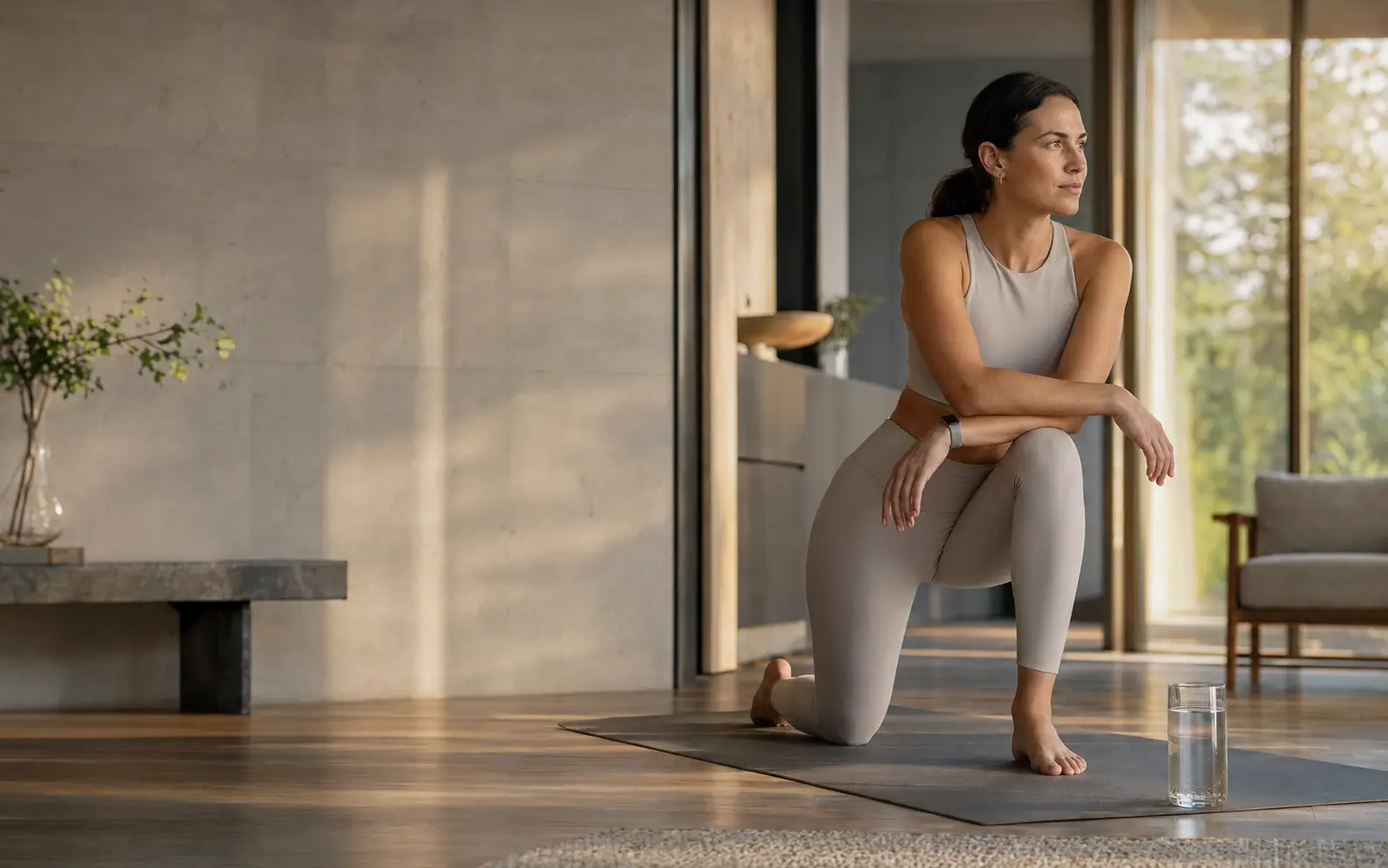
MODERN BIO / STRESS & MOOD / AT-HOME PRACTICE
Moderate evidenceMeditation
This page is a practical starting point—not a diagnosis or personalized prescription. The useful dose depends on the outcome, the person and the quality of the intervention.
THE PRACTICAL PROTOCOL
How to try it without overcomplicating it.
Use one simple format consistently. The value comes from attention and repetition, not completing a perfect session.RECOMMENDED RANGES
Men and women may need different context.
We only show a different amount when physiology, dietary requirements or clinical evidence supports it. Otherwise, we say the range is the same.Typical guidance
Use the starting protocol shown above and scale to health status, capacity and measurable response.
Typical guidance
The same starting protocol generally applies; pregnancy, postpartum status and menopause can require modification.
Important context: Most foundational and at-home practices are adjusted by the individual—not sex alone.
EVIDENCE IN CONTEXT
What the evidence really says.
This intervention is included in the stress & mood roadmap because it may influence a relevant, trackable outcome. The evidence grade below reflects the quality and consistency of human research—not popularity, testimonials or marketing.
Promising human evidence exists, but studies, populations or results have meaningful limitations.
YOUR ACTION PLAN
Turn the idea into a useful experiment.
Run a simple seven-day version of meditation with a specific time, duration and environment.
Rate the target outcome before and after each use and note anything that could distort the result.
If the signal is positive, repeat under similar conditions before spending more money or increasing intensity.
Stop if symptoms worsen, the practice feels unsafe or it begins delaying evaluation of a persistent concern.
QUALITY CHECK
What to look for
- A specific protocol for meditation: intensity, duration, frequency and a conservative way to progress.
- Equipment and environmental safety that match the actual use—not a wellness label or influencer endorsement.
- A simple outcome to track and a stop rule established before increasing intensity or spending more money.
- No detox, cure or replacement-for-medical-care claim that goes beyond the evidence.
SAFETY & INTERACTIONS
What to know first
If inward focus worsens panic, trauma symptoms or rumination, shorten the practice and consider qualified mental-health support.
SCIENTIFIC EVIDENCE
Read the data yourself.
These high-level sources establish the scientific context for stress & mood. The live PubMed link narrows the literature to meditation.Effect of Exercise for Depression
Found meaningful antidepressant effects across several exercise modes, with walking or jogging, yoga and strength training among effective approaches.
Open scientific source ↗Physical Activity for Depression, Anxiety and Distress
Found physical activity improves symptoms across diverse adult populations, although program type and evidence certainty vary.
Open scientific source ↗Search Meditation on PubMed
See the current indexed biomedical literature, including newer trials and reviews added after this page was published.
Open live PubMed search ↗Research quality is not determined by citation count alone. We consider design, sample size, controls, consistency, relevance, conflicts and whether the outcome was clinically meaningful.
MODERN BIO SELECT
The best option—regardless of commission.
We do not sell the top placement. Every winner must earn it through evidence, quality, safety, transparency and real-world value.Best product or tool
We are testing whether any product meaningfully improves meditation beyond the no-cost version.
Get notified when selected →Best professional service
When professional help adds value, we will rank providers by credentials, transparency, evidence and patient experience.
Join the provider shortlist →NEXT STEP